
Start here
Choose one open estimate. Check the scope, equipment assumptions, exclusions and actual validity date. Send one useful question and record the customer's answer.
Step 1 of 6
Pick one service, one territory and real capacity
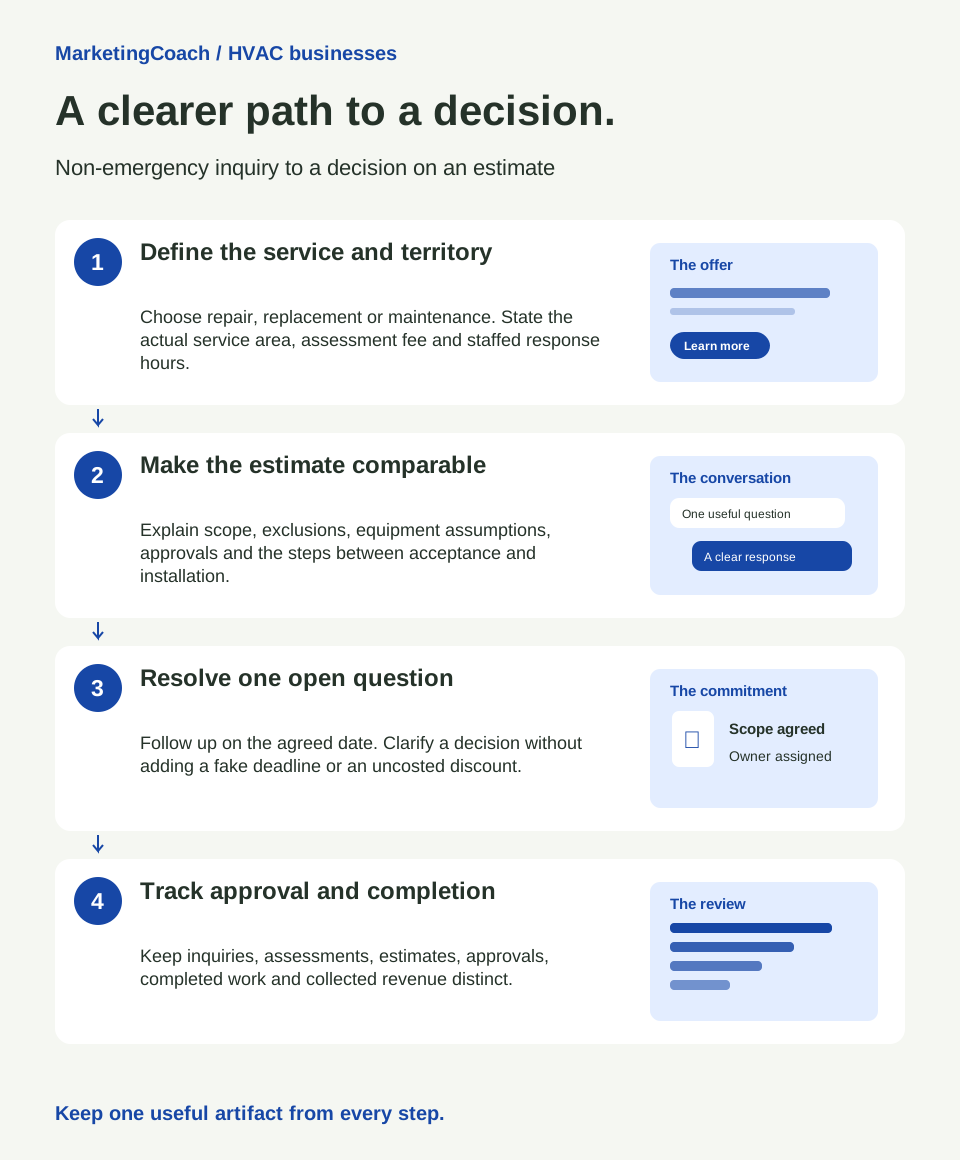
A replacement estimate, a repair visit and a maintenance appointment answer different customer needs. Choose one for the campaign. A page that offers everything can make it harder for a homeowner to understand the first appointment and for dispatch to route the request.
Define the ZIP codes or communities you actually serve, the equipment or property types you handle, staffed response hours and assessment fees. Confirm how many visits your team can accept before promoting more demand. A campaign should match operational capacity, not create promises dispatch cannot honor.
Start with non-emergency estimates for this kit. Keep your emergency instructions and urgent service process separate and accurate. If your company does not provide emergency coverage, do not suggest that it does.
Put it to work
Write one offer: We provide [service] assessments for [property type] in [area]. The assessment costs [fee/conditions]. We respond during [staffed hours].
You are done whenThe office and field team agree on the same service boundaries.
Step 2 of 6
Make a homeowner-friendly estimate page
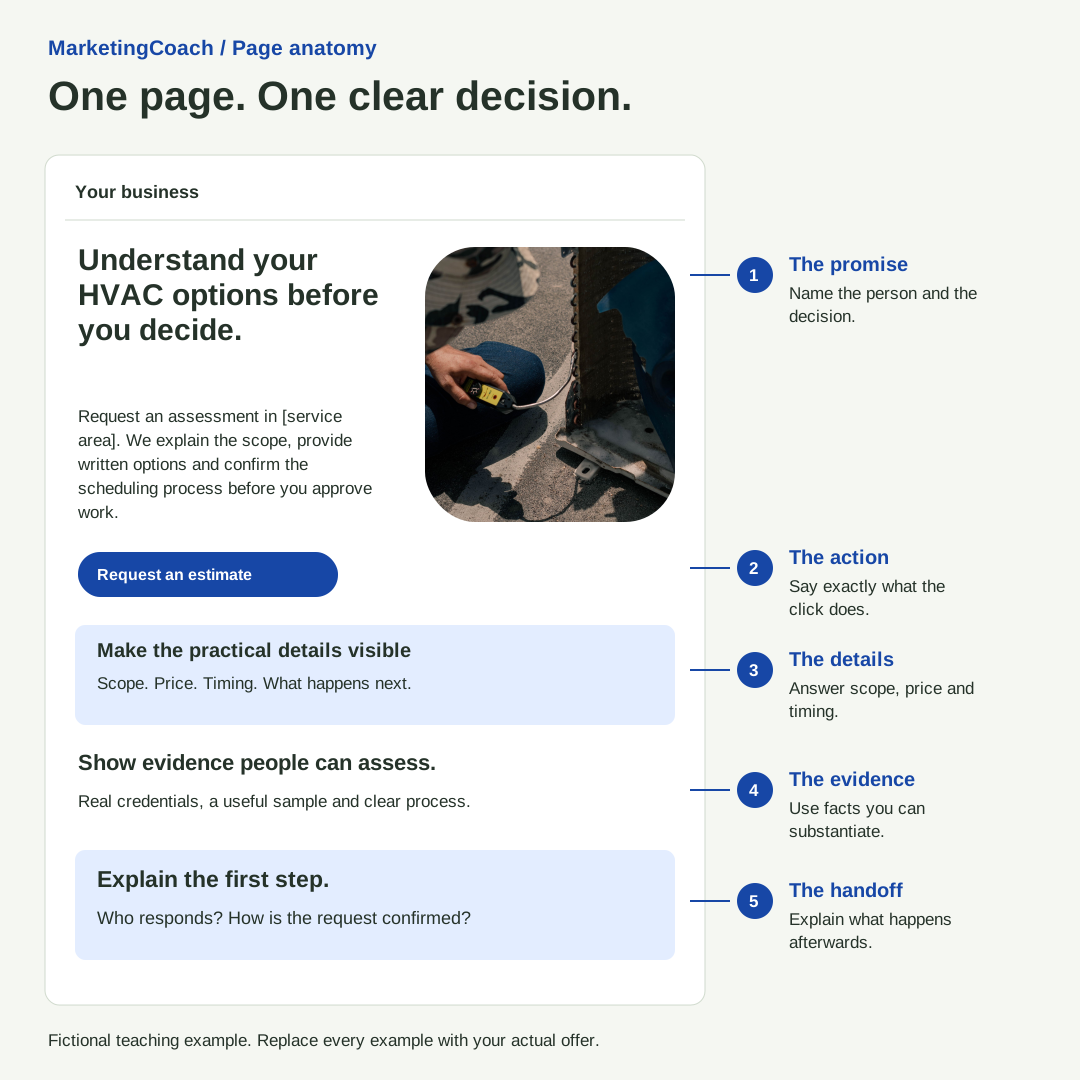
The top of the page should name the service and area, explain the assessment and provide a clear request action. Use actual team or equipment photographs when available. Add the business phone number where a mobile visitor can use it, and distinguish a request from a confirmed appointment.
Explain what information helps route the request, such as location and the general service needed. Keep technical diagnosis with qualified staff. Show whether an on-site assessment is required and when the written estimate will be provided.
A useful estimate summary identifies included work, exclusions, equipment assumptions, permit responsibilities where relevant, payment milestones, warranty details and how changes are handled. Use actual terms. Do not copy another contractor's warranty, license or certification claims.
Put it to work
Ask a person outside the trade to explain your sample estimate back to you. Rewrite the parts they cannot understand.
You are done whenThe homeowner can tell what is included, what is separate and how to ask a question.
Step 3 of 6
Follow up with a decision question
At the end of the assessment, agree on how and when the homeowner wants to hear from you. Record the date and the decision they are trying to make. The follow-up is more useful when it addresses a specific question: scope, timing, comparison, payment process or an item missing from the estimate.
If price is the concern, compare scope before changing price. A lower quote may exclude work or reflect different equipment. Explain your own offer accurately without attacking competitors or implying you know the contents of another estimate.
Close unanswered follow-up after a reasonable agreed sequence. If the written estimate has a real validity period, state it from the outset. Do not manufacture urgency by saying capacity or pricing expires when it does not.
Put it to work
Use the scope recap and estimate-question scripts for three appropriate open estimates. Record what customers actually ask.
You are done whenEvery open estimate has an owner, a review date and a reason for its current status.
Step 4 of 6
Build local demand without multiplying pages
Choose a genuinely served local area and connect the service page with your accurate business profile. Use your real operating details, service categories and contact route. Create helpful location content only where you have something specific to say, such as the service area, scheduling process or local project examples you may share.
Create one practical post: what a replacement assessment includes, how to prepare questions, or what to compare in a written estimate. It should help someone make a decision, rather than promising a lower bill or a rebate that may not apply.
Ask for honest feedback using a consistent process after completed work. Do not pay for positive reviews, screen only happy customers into public review requests or script a customer's experience. Record the channel where inquiries arrive and keep the landing-page message consistent with the post.
Put it to work
Improve one service page, one profile link and one educational post before expanding the campaign.
You are done whenA homeowner can reach the correct service and request process from each placement.
Step 5 of 6
Turn completed work into an appropriate maintenance conversation
Start after the work is complete and any service concerns have been addressed. Explain the actual maintenance scope, visit frequency, price, exclusions, cancellation terms and any renewal behavior. A maintenance plan is a separate agreement, not an automatic addition to installation work.
Make the offer specific to equipment and service your company supports. Avoid guaranteed savings or promises that routine service prevents every breakdown. Have the qualified team review statements about equipment care and manufacturer requirements.
Ask whether the homeowner wants written details. A request for information is not acceptance of a recurring charge. Use the contract and payment process your business has approved, and measure active agreements separately from expressions of interest.
Put it to work
Write a one-page maintenance summary with scope, schedule, full price, renewal and cancellation terms.
You are done whenThe customer can distinguish asking for information from enrolling in the plan.
Step 6 of 6
Measure the path to completed work
Track a defined cohort of qualified inquiries through assessment, estimate and approval. Define a qualified inquiry as one that fits your chosen service and territory; it does not mean the work is technically suitable before assessment. Some assessments will properly end without a replacement estimate.
For each stalled estimate, record an anonymous reason: decision pending, scope question, timing, price, another provider or no response. Aggregate counts reveal where to investigate. Approvals, completed jobs, invoices and collected cash are different stages and should stay separate.
Review capacity alongside conversion. If your next available date is too far away for the customer's need, a messaging change may not solve the issue. If scope questions dominate, improve the estimate. Test one change and compare similar periods, allowing time for longer decisions.
Put it to work
Review open estimates with dispatch and a technical lead for 15 minutes each week.
You are done whenEach estimate has a status, reason and owner; completed work is reconciled with the job system.
Worked example · fictional
Coastal Comfort (fictional)
This example shows how the pieces fit together. The business, offer, budget and counts are invented for teaching; they are not client results or recommended targets.
- Audience
- Homeowners in three nearby ZIP codes comparing non-emergency replacement options
- Offer
- A scheduled replacement assessment with written options, scope and exclusions; any assessment fee is disclosed before booking.
- Capacity
- Twenty-four assessment visits available over four weeks
- Budget
- $0 new media spend; reserve four office hours for the page and open-estimate review
- First channel
- Google Business Profile and relevant local service pages
Start with the page
Understand your HVAC options before you decide.Request an assessment in [service area]. We explain the scope, provide written options and confirm the scheduling process before you approve work.
Support the offer with verified license information where applicable, real service-area details, documented scope, actual customer feedback and team photographs. Then use “Request an estimate” as the primary action and explain what happens after someone clicks.
Read the numbers carefully
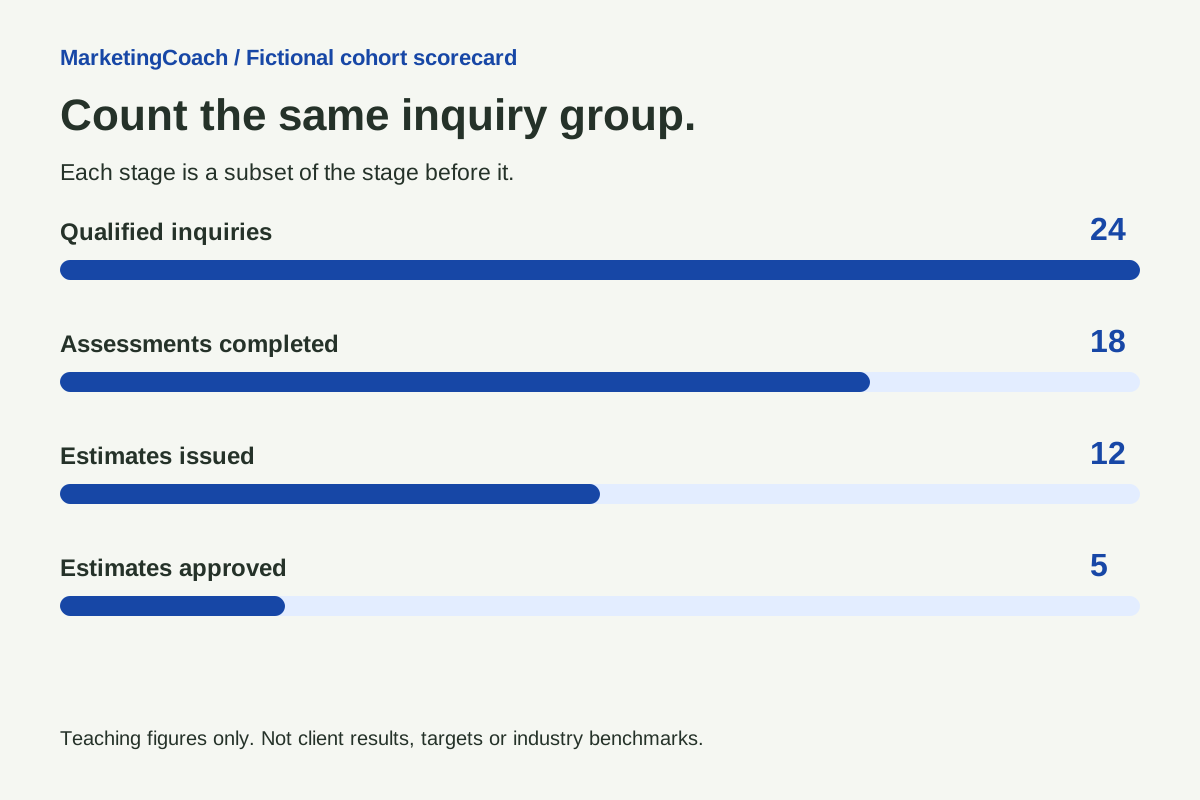
Follow the same group of 24 inquiries through a defined review window. Here are illustrative counts for that cohort:
| Stage | Count | From prior stage |
|---|---|---|
| Qualified inquiries | 24 | — |
| Assessments completed | 18 | 75.0% |
| Estimates issued | 12 | 66.7% |
| Estimates approved | 5 | 41.7% |
Five of twelve estimates were approved. Review unresolved scope and comparison questions. The six assessments without an estimate need a recorded reason; they may have required repair, been unsuitable or still be awaiting a quote.
Decision: review the actual questions and operational constraints before choosing a change. These percentages describe a tiny fictional sample; they do not tell you what your conversion rate should be.
Your first 30 days.
Use the sequence as a starting point. Assign one owner and a realistic review date to each week.
Choose the offer
Confirm service, ZIP codes, assessment fee and visit capacity; review the page and estimate format.
Keep: One specific service pageClear the open-estimate queue
Assign owners; agree follow-up dates; send useful scope or decision questions.
Keep: Open estimates have a statusImprove local discovery
Update the relevant profile link; publish an assessment explainer; test the request path on mobile.
Keep: One consistent local campaignReview and extend
Review approvals and completed work; improve the most common unresolved question; offer maintenance details where appropriate.
Keep: A repeatable weekly routineUse AI as an editor for your plan.
Copy the prompt below into your preferred AI tool with approved, non-confidential business details. Review its output before using it.
Act as a critical marketing editor for a hvac businesses business. Review my audience, offer, landing page, follow-up and measurement plan. Identify missing facts, unclear scope and unsupported claims. Do not invent prices, results, credentials, availability or customer evidence. Ask for missing information. Suggest one specific improvement to the largest visible gap and explain what evidence would show whether it helped.
This is a marketing workflow for non-emergency requests. Do not give hazardous DIY instructions or promise same-day service, financing terms, energy savings or rebate eligibility without current evidence.
Choose and adapt an original messageReferences and review notes
The workflows and templates are original editorial recommendations, not industry benchmarks. The references below support the advertising, privacy and profile guidance. Check requirements that apply to your own business before launch.
- Google: Guidelines for representing your business
- Google: Tips to get more reviews
- FTC: Advertising and Marketing Basics
Reviewed November 13, 2026.