Start here
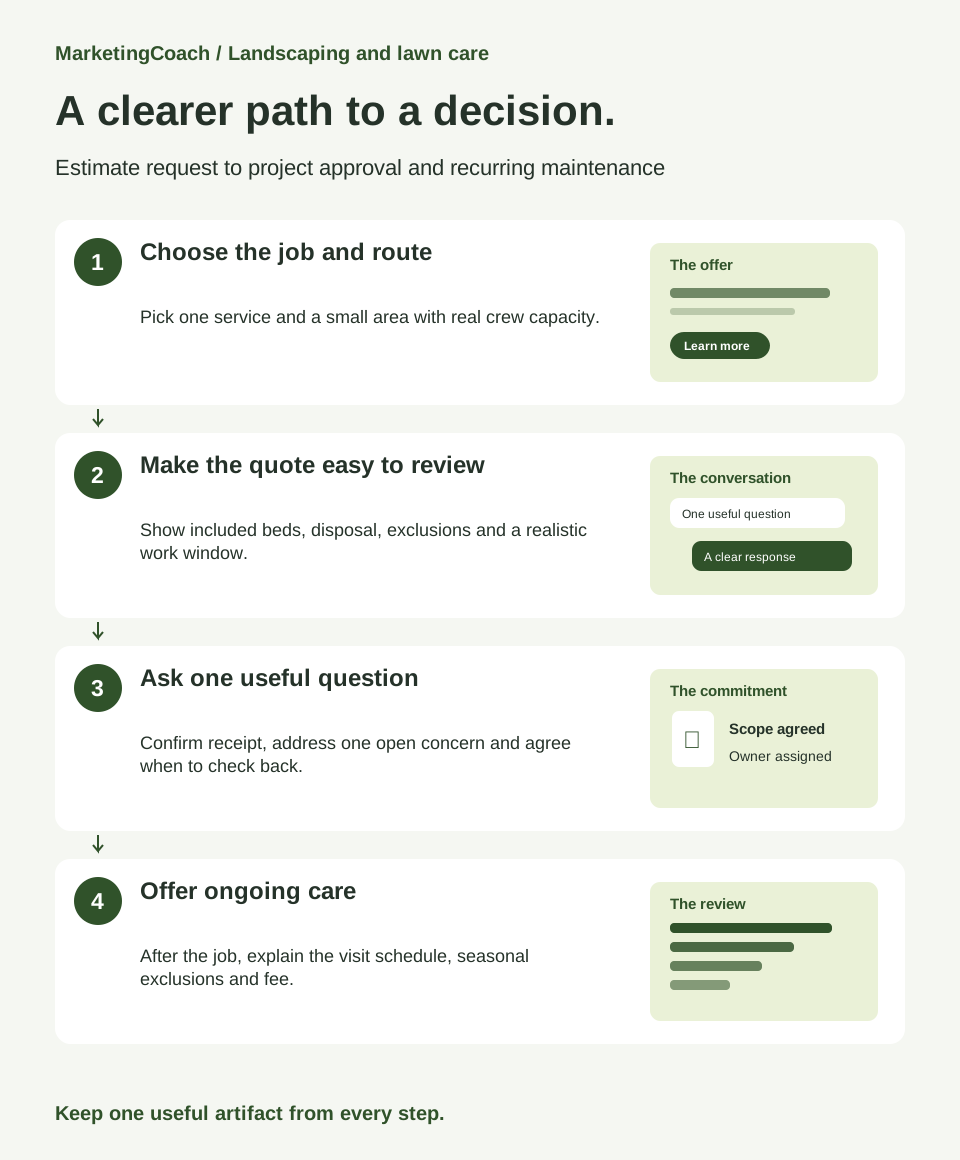
Pick one open estimate. Check the scope, exclusions and start window. Send one question that helps the customer decide, and record when to follow up.
Step 1 of 6
Start with one service and a route
Choose seasonal cleanup, mowing or another service you already deliver reliably. Map the neighborhoods you serve and count crew hours, travel time, and disposal trips before promising availability.
Start with an existing route. Where the crew already works on Wednesdays, offer a visit window that fits that route and state how weather can change it.
Ask the office team which requests should be declined or referred. A service-area mismatch or request for work you do not perform belongs outside your qualified inquiry count.
Put it to work
Write the service, neighborhoods, capacity and excluded requests in the planner.
You are done whenThe office and crew agree what can be scheduled.
Step 2 of 6
Build a page that answers scope questions
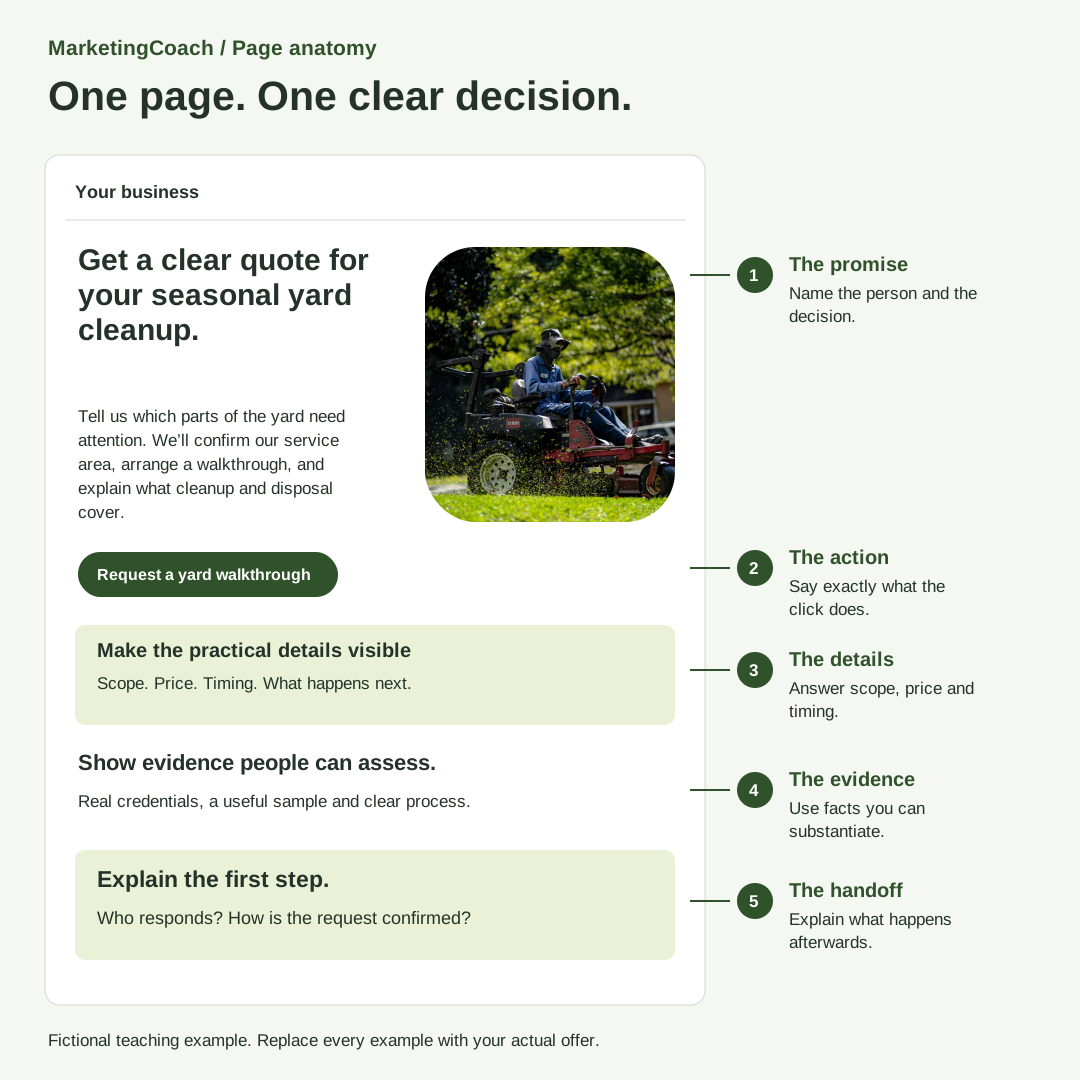
Show the work, service area and first step near the top. Explain whether a walkthrough costs anything and whether price depends on access, yard size or debris volume.
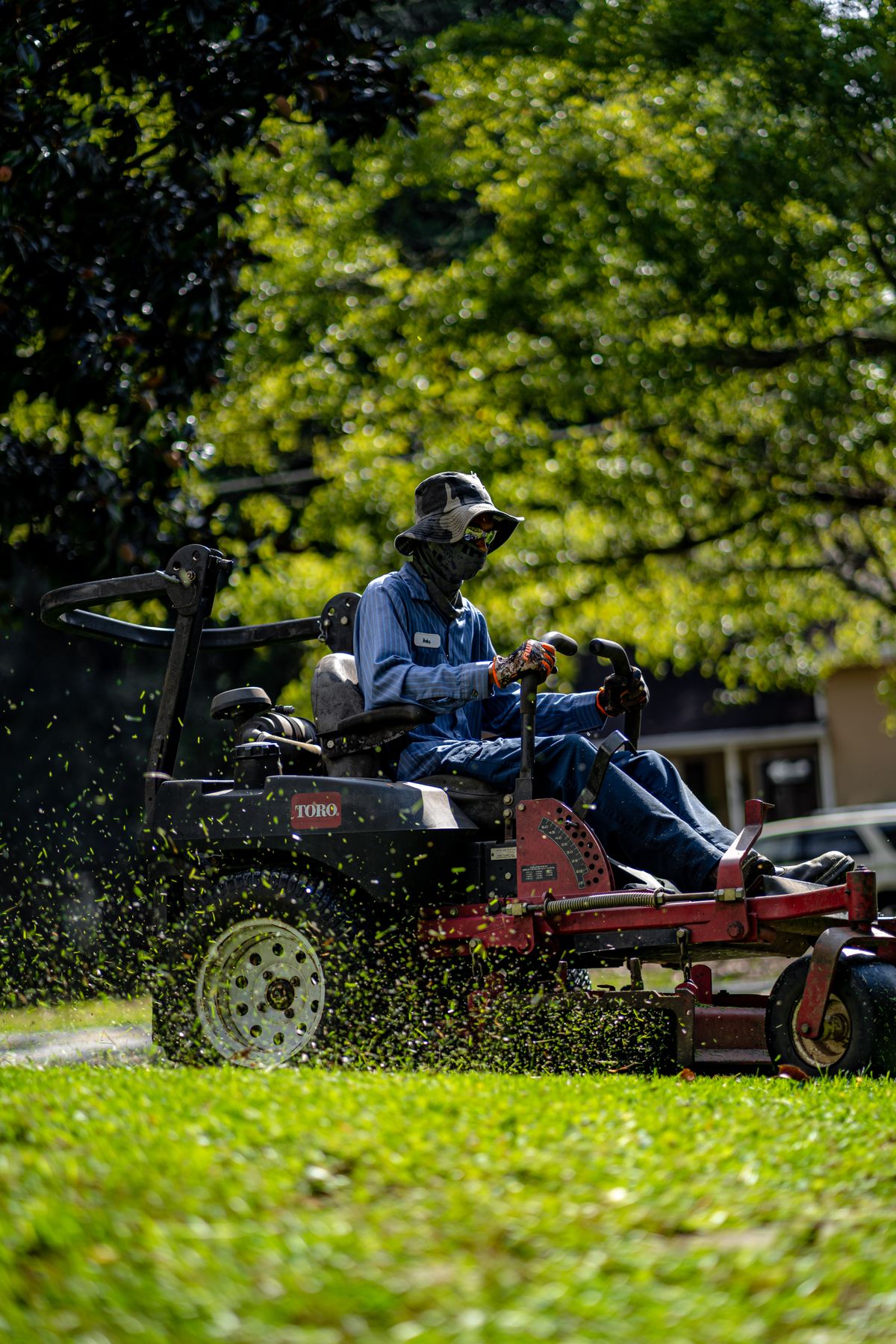
Use a real project photo with permission and explain exactly what the crew did. A photo of completed edging or a cleared bed can illustrate the scope better than a generic claim about quality.
Test the request on a phone. Ask for only the information needed for the next step and route details about gates or access to your secure scheduling process.
Put it to work
Draft the service page and test its request link.
You are done whenA homeowner knows what happens after requesting a quote.
Step 3 of 6
Make each quote comparable
List each area of the yard, tasks, disposal, materials, timing and exclusions. If hauling or mulch changes the price, show it as a separate line.
Include the action to approve and how you will confirm the date. Write any quote validity period based on real pricing or availability conditions.
When scope changes, update the written quote and send the new version clearly. A larger job should never be implied by swapping a few words in a text.
Put it to work
Rewrite one estimate with scope, options and acceptance instructions.
You are done whenThe crew and customer can identify exactly what was accepted.
Step 4 of 6
Follow up on a real decision
After sending a quote, give the customer a chance to read it. At the agreed time ask about one meaningful choice, such as whether to include hauling or whether the proposed week works.
If the customer asks for time, agree a date. If they decline, record the reason when offered and close the thread. Keep the tone helpful and respect contact preferences.
Use simple states: sent, question open, awaiting decision, accepted or declined. Assign one owner so a customer does not receive the same check-in twice.
Put it to work
Adapt the quote delivery, follow-up and closeout scripts.
You are done whenEvery open estimate has an owner and review date.
Step 5 of 6
Offer maintenance after the project
At completion, walk through the work and resolve any open questions. Ask whether the customer wants the yard kept at this baseline before sending a plan.
Show what a visit covers, visit frequency, seasonal changes, exclusions, fee and cancellation terms. Maintenance may include mowing and edging while pruning, mulch or storm cleanup are priced separately.
Offer maintenance only where your route has capacity. Confirm the first visit and give the customer a clear point of contact for weather changes or requests.
Put it to work
Draft one route-specific maintenance option and its handoff.
You are done whenAccepted maintenance has a clear schedule and scope.
Step 6 of 6
Measure the same group of inquiries
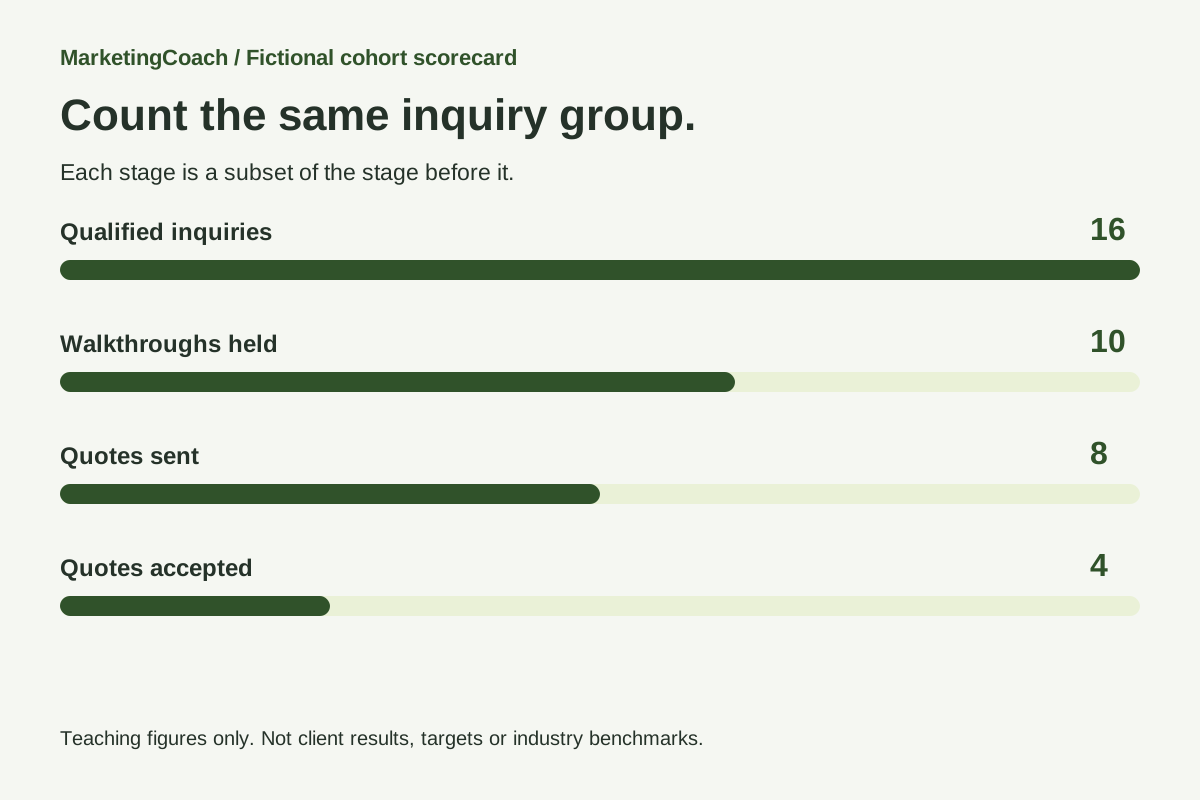
Follow one group from qualified request through walkthrough, quote and approval. Record pending quotes separately until the review window gives customers time to decide.
Oakline sent eight quotes from ten walkthroughs. Check the reason for two walkthroughs without quotes before investing in more leads. If quote approvals stall, review scope and timing questions with the crew.
Track completed projects, maintenance offers and maintenance starts in a separate view. That shows whether the plan is being offered and whether customers find it valuable.
Put it to work
Review the scorecard weekly and change one message or page detail at a time.
You are done whenYou can name the stage that needs attention and who owns it.
Worked example · fictional
Oakline Yard Care (fictional)
This example shows how the pieces fit together. The business, offer, budget and counts are invented for teaching; they are not client results or recommended targets.
- Audience
- Homeowners in two neighborhoods already served by the crew
- Offer
- A walkthrough for a seasonal cleanup, with written scope for beds, pruning, debris removal and disposal. Maintenance is quoted separately after the job.
- Capacity
- Ten walkthrough slots over four weeks and three available maintenance stops on the existing route
- Budget
- No new ad spend. Set aside three office hours for the service page and quote review.
- First channel
- Your local service page, business profile, and existing customer relationships
Start with the page
Get a clear quote for your seasonal yard cleanup.Tell us which parts of the yard need attention. We’ll confirm our service area, arrange a walkthrough, and explain what cleanup and disposal cover.
Support the offer with real job photos used with permission, verified service areas, an example scope and a written explanation of weather rescheduling. Then use “Request a yard walkthrough” as the primary action and explain what happens after someone clicks.
Read the numbers carefully
Follow the same group of 16 inquiries through a defined review window. Here are illustrative counts for that cohort:
| Stage | Count | From prior stage |
|---|---|---|
| Qualified inquiries | 16 | — |
| Walkthroughs held | 10 | 62.5% |
| Quotes sent | 8 | 80.0% |
| Quotes accepted | 4 | 50.0% |
Four of eight quotes were accepted. Review the remaining four for timing, scope questions or pending decisions. Track maintenance offers and signups separately after completed jobs.
Decision: review the actual questions and operational constraints before choosing a change. These percentages describe a tiny fictional sample; they do not tell you what your conversion rate should be.
Your first 30 days.
Use the sequence as a starting point. Assign one owner and a realistic review date to each week.
Define the offer
Pick one cleanup service, two neighborhoods and a crew capacity target.
Keep: Publish a clear service pageReview quotes
List each open quote, its scope question and owner.
Keep: Send a useful reply for each due quoteOffer maintenance
Set visit scope and route slots, then offer it after eligible projects.
Keep: Produce a written maintenance optionInspect the handoffs
Review quote approvals and maintenance starts separately.
Keep: Choose one improvement for the following weekUse AI as an editor for your plan.
Copy the prompt below into your preferred AI tool with approved, non-confidential business details. Review its output before using it.
Act as a critical marketing editor for a landscaping and lawn care business. Review my audience, offer, landing page, follow-up and measurement plan. Identify missing facts, unclear scope and unsupported claims. Do not invent prices, results, credentials, availability or customer evidence. Ask for missing information. Suggest one specific improvement to the largest visible gap and explain what evidence would show whether it helped.
Keep home addresses, access notes and client details in your scheduling system. Verify any license, insurance, chemical treatment or service claims before publication.
Choose and adapt an original messageReferences and review notes
The workflows and templates are original editorial recommendations, not industry benchmarks. The references below support the advertising, privacy and profile guidance. Check requirements that apply to your own business before launch.
- Google Business Profile: Business representation guidelines
- Google Business Profile: Tips for getting reviews
Reviewed November 13, 2026.