
A recurring cleaning offer makes ongoing care easier to understand. It should explain what changes after the first clean, how often you will visit, what each visit includes and how the customer can change the schedule.
This guide is for a residential cleaner whose service is already dependable. Recurring bookings do not fix poor first-visit experiences, unreliable scheduling or unprofitable pricing. Begin with those foundations.
1. Separate first-clean work from maintenance
A first visit may involve more buildup, assessment and time. Maintenance cleaning assumes an agreed condition and scope. Spell out the difference so a customer does not expect the same tasks at a lower price forever.
| Part of the offer | What to explain |
|---|---|
| First visit | Assessment, included tasks, estimated duration and any separately priced deep-clean work. |
| Maintenance scope | Rooms and tasks included at each visit, with exclusions written clearly. |
| Frequency | Weekly, every two weeks or another schedule that you can reliably provide. |
| Per-visit price | Actual price for the agreed home, scope and frequency; note when reassessment may be needed. |
| Changes | How to reschedule, change scope or stop; use your actual written policy. |
2. Ask about the first experience
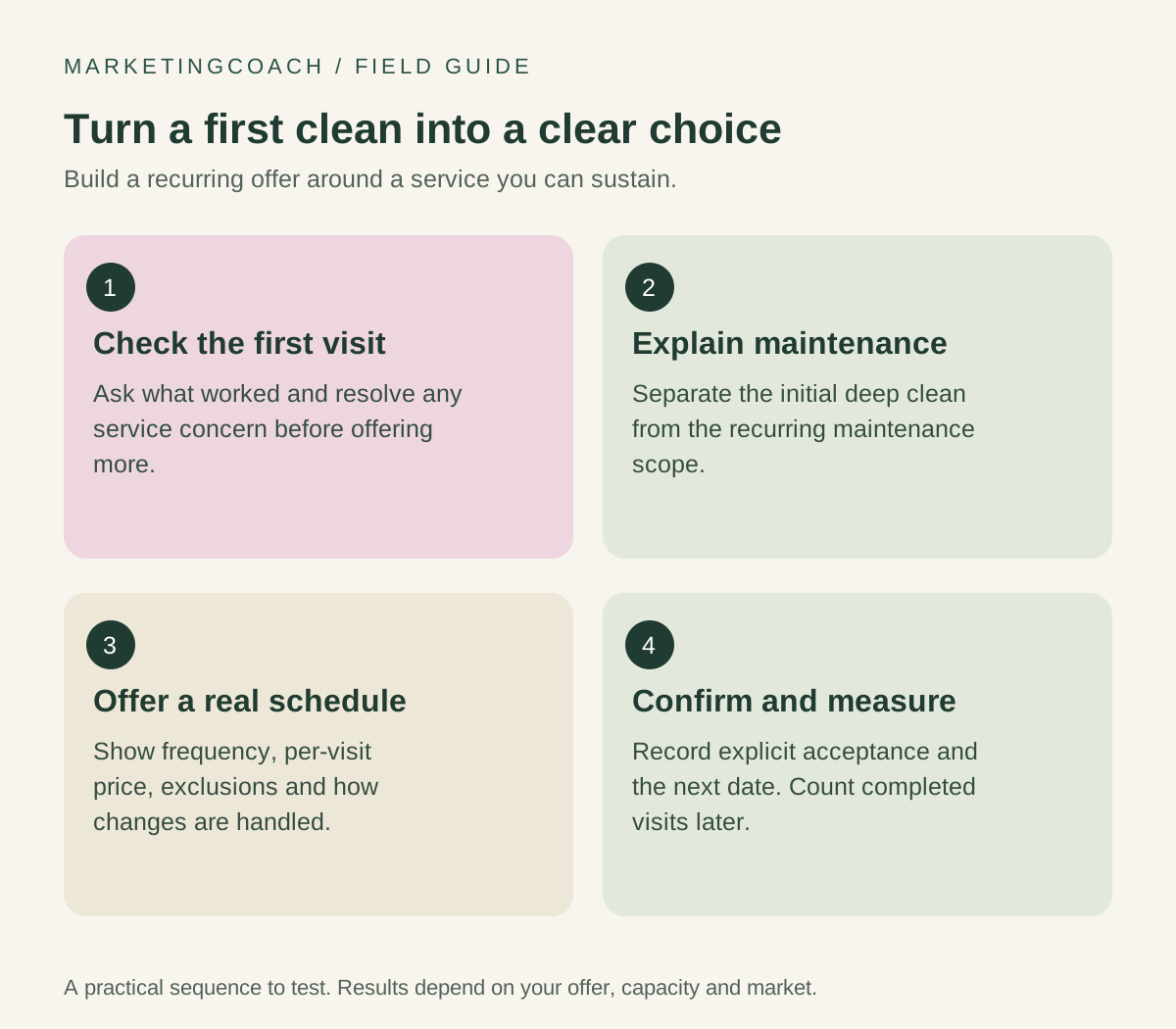
After the first visit, ask a neutral question: “Did the clean meet the scope we agreed on? Is there anything you want me to understand before a future visit?” Listen before offering a plan. If something was missed, explain how you will handle it through your real service policy.
Do not require a good review before helping someone. Feedback and recurring-service choices should be separate from any public-review request.
3. Present one clear maintenance option
For ongoing help, we can offer [frequency] cleaning for [included rooms and tasks] at [price] per visit. [Exclusions] are quoted separately. We currently have [real schedule option]. Here is how rescheduling and changes work: [policy]. Would you like the written scope before deciding?
Offer more choices only when they represent a meaningful difference. A weekly and an every-two-weeks option may be useful; five nearly identical packages can make the decision harder. Do not use “membership” if you have not defined the actual service terms.
4. Check the economics before offering a discount
Use an illustrative example: a maintenance visit priced at $180 with $115 of direct labor, supplies and travel leaves $65 before overhead, acquisition costs and taxes. A $20 discount reduces that amount to $45. The numbers are examples only; replace every cost with your own.
If a visit takes longer than expected or requires extra travel, the remaining amount can shrink further. Record actual delivery time after the first few visits. A full schedule at unsustainable prices is not the goal.
Be precise about frequency: every two weeks is about 26 visits per year, not exactly two visits each calendar month. For a simple initial decision, compare the expected contribution from the next four visits, then revisit it using completed and paid work. Do not describe hypothetical future visits as earned revenue.
5. Confirm acceptance and protect the schedule
- Get an explicit yes to the scope, price and frequency.
- Confirm the first recurring date and arrival window.
- Explain the actual cancellation, rescheduling and access process.
- Record the booking in your normal calendar or customer system.
- Update the kit’s tracker using a reference ID.
Count accepted recurring bookings separately from completed recurring visits. A customer who asks for details has not yet subscribed. Avoid reserving a recurring spot indefinitely without agreement.
6. Ask for referrals and reviews thoughtfully
You can ask customers whether someone they know would find your service useful. Keep that separate from public reviews. Google prohibits incentives for reviews, including discounts or free services in exchange for posting, changing or removing a review. Ask for honest feedback without screening for only happy customers.
Thank you for choosing [business]. If you’d like to share your experience, here is our review link: [link]. Honest feedback helps others understand our service.
For a referral, make it easy to share a quote-request link. Do not ask a customer to hand over a friend’s private contact details for unsolicited follow-up.
Measure whether the offer fits
Record first cleans, recurring offers made, accepted recurring bookings, completed visits and reasons people decline. If customers want only a move-out clean, recurring maintenance may not fit them. Test the audience and service match before rewriting every message.
Continue the cleaning-business series
- Cleaning business marketing plan: a 30-day example
- Cleaning quote follow-up: 5 templates for a clear next step
- Local cleaning marketing: a neighborhood campaign you can copy
Sources and scope
These are original MarketingCoach examples, reviewed November 11, 2026. They are not customer case studies or forecasts. Platform guidance: Google service-area guidance and Google review guidance. Industry context: Jobber’s cleaning-client guide. Platform settings can change.