Use ChatGPT Work and GPT-6 Astra for campaign work
An evidence-linked campaign brief and a reviewed first draft.
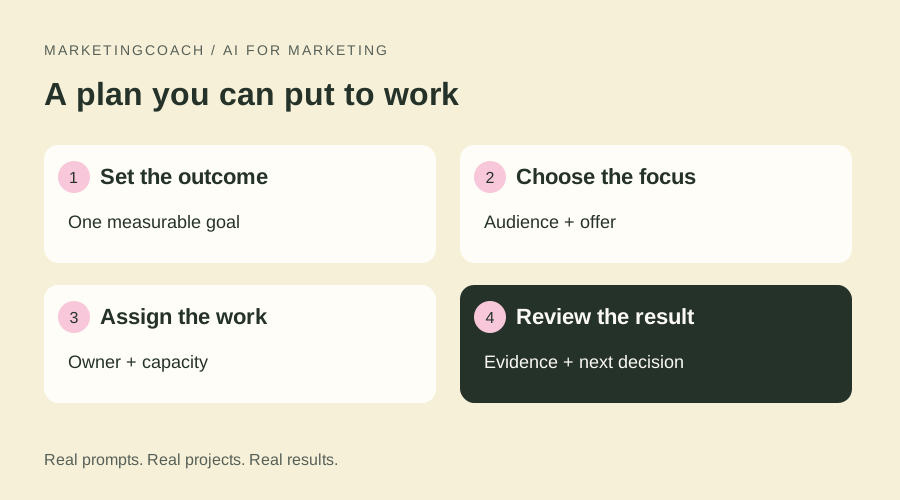
Bring these inputs
Your available ChatGPT workspace, approved research files, brand voice and the campaign objective.
Tools for this exercise
ChatGPT Work / GPT-6 Astra where available. Product names and access can change; check the linked official documentation.
Work through it, step by step
Select an available model and check which tools are enabled in your account. This lesson uses verified GPT-6 Astra naming; “Astra 6.5” was not verified in the official sources reviewed.
Provide the campaign brief and source material. Ask the assistant to identify contradictions and missing facts before drafting.
Request a concise creative brief, then produce one channel asset at a time. Keep the same audience, offer and evidence across variants.
Use a separate review pass for claims, tone, accessibility and links. Have the owner approve the final copy and any external action.
A prompt you can reuse
Replace the brackets with your real context. Remove personal or confidential data unless you have permission and an appropriate workspace.
Create a campaign brief from these sources: [sources]. Include audience, problem, promise, evidence, objections, CTA and measurement. Link each factual claim to a source. Then draft one [channel] asset. Finish with unresolved questions and a claims checklist; do not invent proof.
Example in practice
Turn approved interview notes and product documentation into a landing-page brief and three clearly distinct headline hypotheses.
Human review checkpoint
Model capability does not guarantee access to your apps or data. Verify outputs and connected-tool permissions in the actual workspace.
Your finished deliverable
An evidence-linked campaign brief and a reviewed first draft. Save the source material, your draft, the corrections you made and the next decision. Ask a colleague to explain what the work recommends; if they cannot, simplify it before moving on.
- Evidence and assumptions are clearly separated.
- The output matches the brief and has an accountable owner.
- Facts, links, accessibility and relevant permissions have been checked.
- The next step has a metric or observable acceptance criterion.